This case study summarizes our paper in Frontiers in Veterinary Science (2024), volume 11, article 1505427, open access under CC BY 4.0. Read the full paper: https://doi.org/10.3389/fvets.2024.1505427
Highlights
- Heifers
- 29female fetuses, 2 × 2 design
- Tissues
- 3lung, mammary gland, small intestine
- EBD in the dam’s gut
- −67%with one-carbon metabolites (P = 0.01)
- Effect of restriction
- NoneP ≥ 0.24, fetus and dam
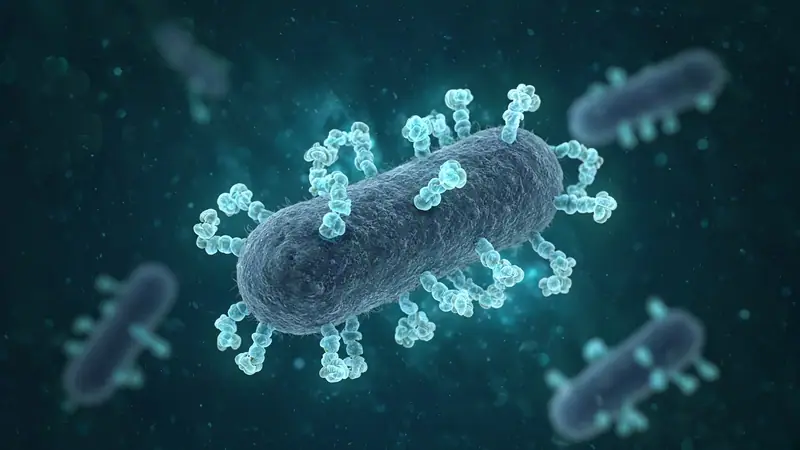
- Antimicrobial peptides (AMP) are the body's own fast-acting antibiotics and a first line of defense in the lung, udder and gut.
- Restricting the dam's feed in the first 63 days did not change AMP gene expression in the fetus or the dam at day 161.
- One-carbon metabolite (OCM) supplements lowered enteric β-defensin by 67% in the dam's small intestine and tended to lower two AMPs in the fetus.
- The authors link the lower expression to the anti-inflammatory effects of OCM, not to weaker immunity.
Methodology
AMP such as β-defensins and cathelicidins are short, positively charged molecules that break open the membranes of bacteria, fungi and some viruses. Bacteria are less likely to develop resistance to them than to conventional antibiotics. They protect against the pathogens behind respiratory disease, calf diarrhea and mastitis, and their genes are controlled in part by epigenetic marks. One-carbon metabolites supply the methyl groups for those marks, so the study asked whether the dam's diet and OCM supply change AMP expression.
The four treatment groups
CON −OCM
- Supplement
- Corn carrier, saline injections
CON +OCM
- Supplement
- One-carbon metabolites
RES −OCM
- Supplement
- Corn carrier, saline injections
RES +OCM
- Supplement
- One-carbon metabolites
Control heifers were fed to gain 0.45 kg/day (actual 0.60 kg/day) and restricted heifers to lose 0.23 kg/day. The OCM supplement was rumen-protected methionine (7.4 g/day) and choline (44.4 g/day) plus weekly injections of folic acid (320 mg) and vitamin B12 (20 mg). Treatments ran to day 63, then all heifers shared one diet until day 161.
Where the samples came from
Lung
- Site
- Left cranioventral lung, the region respiratory disease mainly affects
- From
- Fetus and dam
Mammary gland
- Site
- Parenchyma of the right forequarter
- From
- Fetus and dam
Small intestine
- Site
- Ileum, 10 cm before the ileocecal junction
- From
- Dam (fetal expression low or absent)
From tissue to gene expression
- Day 161 Tissues collected Snap-frozen in liquid nitrogen
- RNA RNA extracted Then reverse transcribed to cDNA
- Validation Primer efficiency 90–110% accepted; S100A7 and TAP too low to measure
- RT-qPCR 5 AMP genes LAP, EBD, BNBD4, BNBD5, CATHL5
Results
The dam's plane of nutrition had no effect on any AMP gene in either the fetus or the dam (P ≥ 0.24). The OCM supplement did:
AMP expression with and without OCM
One effect went the other way. In the dam's lung, CATHL5 tended to depend on both treatments together (P = 0.06): it was highest in the RES +OCM group (1.26-fold) compared with CON +OCM (0.84) and RES −OCM (0.85).
What changed and what did not
Fetal tissues
- Restriction
- No effect
- OCM
- CATHL5 (lung) and BNBD5 (mammary gland) tended lower
- Not changed
- BNBD4 (lung), CATHL5 (mammary gland)
Maternal tissues
- Restriction
- No effect
- OCM
- EBD (small intestine) 67% lower
- Not changed
- BNBD4 (lung), BNBD5 and LAP (mammary gland), LAP (small intestine)
Discussion
The authors give several reasons why restriction had no effect. The restriction may not have been severe or long enough for these genes; the body may protect AMP, a low-cost innate defense, over more expensive immune responses; and AMP are strongly induced by infection, which these healthy animals did not have. Only female fetuses were studied. Low or absent expression of some AMP in the fetus fits evidence that they rise closer to birth and with labor.
Lower AMP with OCM does not have to mean weaker immunity. AMP expression rises with inflammation through the NF-κB and MAPK pathways, and OCM raises S-adenosylmethionine, which suppresses both pathways. A better-supplied fetus may also simply need less immune activation. OCM given in the same 63-day window also raised activated p38 MAPK in the dam's liver at day 260, as covered in our maternal liver p38 MAPK case study.
The same treatments and day 161 sampling were used for the fetal gut in our vascularity and sugar transporter case studies. The authors call for challenge studies and direct measurement of the NF-κB and MAPK pathways.
Conclusion
- Restricted maternal nutrition in early pregnancy did not change AMP gene expression in the fetal or maternal lung, mammary gland or small intestine.
- OCM supplementation lowered EBD in the dam's small intestine and tended to lower CATHL5 and BNBD5 in fetal tissues.
- The study measured some AMP genes in bovine fetal tissues for the first time.
Key References
- Daneshi M, Borowicz PP, Entzie YL, Syring JG, King LE, Safain KS, Anas M, Reynolds LP, Ward AK, Dahlen CR, Crouse MS, Caton JS (2024). Influence of maternal nutrition and one-carbon metabolites supplementation during early pregnancy on bovine fetal small intestine vascularity and cell proliferation. Veterinary Sciences, 11, 146. https://doi.org/10.3390/vetsci11040146
- Daneshi M, Caton JS, Caixeta LS, Eftekhari Z, Ward AK (2023). Expression, regulation, and function of β-defensins in the bovine mammary glands: current knowledge and future perspectives. Animals, 13, 3372. https://doi.org/10.3390/ani13213372
- Caton JS, Crouse MS, McLean KJ, Dahlen CR, Ward AK, Cushman RA, Grazul-Bilska AT, Neville BW, Borowicz PP, Reynolds LP (2020). Maternal periconceptual nutrition, early pregnancy, and developmental outcomes in beef cattle. Journal of Animal Science, 98, skaa358. https://doi.org/10.1093/jas/skaa358
- Sinclair KD, Allegrucci C, Singh R, Gardner DS, Sebastian S, Bispham J, Thurston A, Huntley JF, Rees WD, Maloney CA, Lea RG, Craigon J, McEvoy TG, Young LE (2007). DNA methylation, insulin resistance, and blood pressure in offspring determined by maternal periconceptional B vitamin and methionine status. Proceedings of the National Academy of Sciences, 104, 19351–19356. https://doi.org/10.1073/pnas.0707258104
- Crouse MS, Greseth NP, McLean KJ, Crosswhite MR, Pereira NN, Ward AK, Reynolds LP, Dahlen CR, Neville BW, Borowicz PP, Caton JS (2019). Maternal nutrition and stage of early pregnancy in beef heifers: impacts on hexose and AA concentrations in maternal and fetal fluids. Journal of Animal Science, 97, 1296–1316. https://doi.org/10.1093/jas/skz013