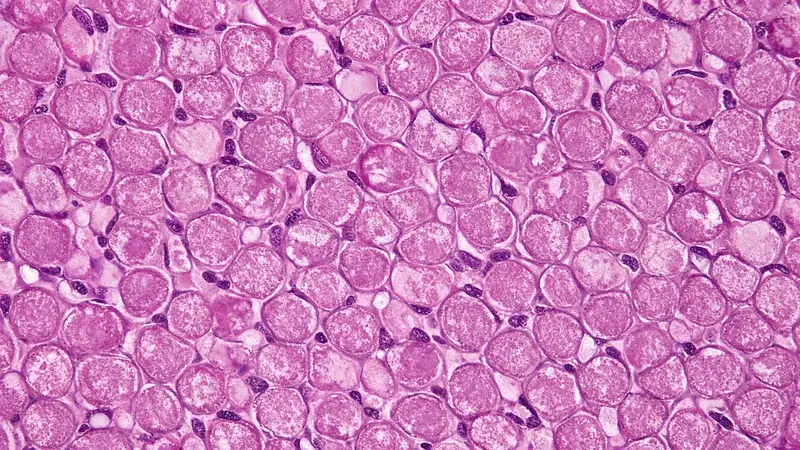
This case study explains a conference abstract in the Journal of Animal Science, volume 104, supplement 5 (2026). Read the abstract: https://doi.org/10.1093/jas/skag272.500
Highlights
- piRNAs detected
- 9,803fetal longissimus muscle, day 161
- piRNAs changed
- 266–571per group comparison
- piRNA–mRNA interactions
- 13585 piRNAs, 58 target genes
- Targets also changed as mRNA
- 29 / 12in the two target comparisons
- Small RNA sequencing found 9,803 piRNAs, a class of small non-coding RNAs, in fetal calf muscle.
- Every comparison of the dam's rate of gain and one-carbon metabolite (OCM) treatments changed hundreds of them.
- Many predicted piRNA targets also changed at the mRNA level, giving two lines of evidence for the same regulation.
- Targets include genes for muscle metabolism and transcriptional control, such as THRB, CEBPB, CIDEA and NRG4.
Methodology
Poor or unbalanced maternal nutrition in critical windows can affect calf growth, metabolism and performance for life, largely through epigenetic mechanisms. piRNAs (piwi-interacting RNAs) are small non-coding RNAs that may regulate genes in body tissues by targeting mRNAs. One-carbon metabolites supply the methyl groups for epigenetic regulation, but their effect on piRNAs had not been studied.
The four treatment groups
C −OCM
- Gain
- 0.45 kg/day
- Supplement
- Saline
C +OCM
- Gain
- 0.45 kg/day
- Supplement
- One-carbon metabolites
R −OCM
- Gain
- −0.23 kg/day
- Supplement
- Saline
R +OCM
- Gain
- −0.23 kg/day
- Supplement
- One-carbon metabolites
The OCM supplement was rumen-protected methionine (7.4 g/day) and choline (44.4 g/day) with weekly injections of folate (320 mg) and vitamin B12 (20 mg). Treatments ran from breeding to day 63, then all heifers ate a common control diet.
From fetal muscle to predicted targets
- Day 161 Fetal muscle collected Longissimus dorsi; total RNA
- Sequencing Small RNA and mRNA 9,803 piRNAs after quality control
- DESeq2 Changed piRNAs and mRNAs P < 0.05, |log fold change| ≥ 0.5
- IntaRNA Target prediction 3′UTR binding, energy ≤ −25 kJ/mol
- Overlap Targets also changed Same comparison at the mRNA level
Results
piRNAs changed in each comparison
Targets were predicted for two comparisons: restriction without OCM (R −OCM vs C −OCM) and restriction with OCM (R +OCM vs C +OCM). Together they gave 135 unique interactions involving 85 changed piRNAs and 58 genes, with 23 genes shared between the two.
Restriction with and without OCM
Restriction alone
- Interactions
- 73, targeting 40 genes
- Also changed as mRNA
- 29 genes
- Examples
- THRB, CEBPB, CIDEA, MAG
Restriction with OCM
- Interactions
- 66, targeting 41 genes
- Also changed as mRNA
- 12 genes
- Examples
- LIPT1, MYT1L, NRG4, TUBB1
Discussion
Predicted targets that also changed as mRNA give two lines of molecular evidence for the same regulation: 29 genes for restriction alone and 12 for restriction with OCM. The affected genes relate to muscle metabolism and transcriptional regulation, and the authors suggest piRNAs may help program fetal muscle in response to maternal nutrition.
Muscle fibers form before birth, so changes at this stage can matter for life, as our muscle development review explains. The same treatments and day 161 sampling were used in our fetal mitochondria case study, which also studied fetal muscle.
As a conference abstract, this work predicts piRNA–mRNA interactions computationally; it does not confirm them in the lab, and each group has 7 or 8 fetuses.
Conclusion
- Fetal calf muscle contains thousands of piRNAs, and hundreds respond to the dam's rate of gain and OCM supplementation.
- Predicted piRNA targets that also changed as mRNA include genes for muscle metabolism and transcriptional regulation.
- piRNAs may contribute to fetal muscle programming by maternal nutrition.