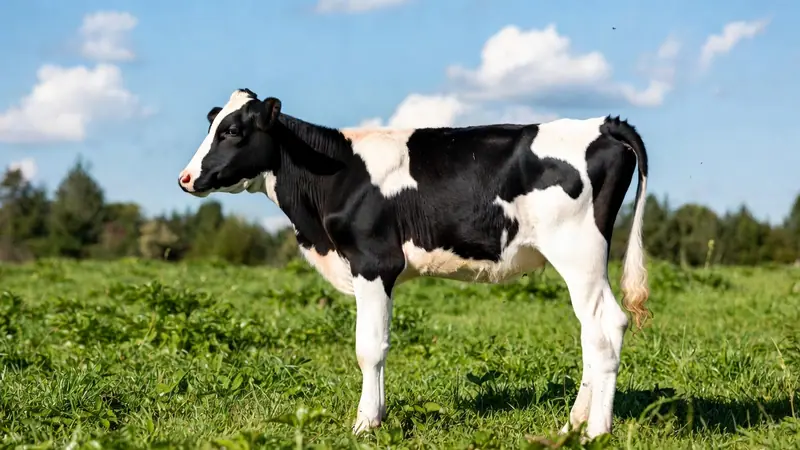
At a glance
- What is a heifer?
- Female cattle under 2 years of age that have not calved (Cornell). Read more about what is a heifer
- What is the difference between a heifer and a cow?
- Whether she has had a calf: a cow has produced one or more calves (Cornell). Read more about what is the difference between a heifer and a cow
- What is a first-calf heifer?
- A heifer that has had her first calf. She keeps growing until about four years old, so she needs extra care (UC Davis; University of Wisconsin). Read more about what is a first-calf heifer
- When are heifers bred?
- Commonly at 14–15 months, to calve at 22–26 months (University of Wisconsin). Read more about when are heifers bred
- How big should a heifer be before breeding?
- The traditional target is 65–70% of mature weight, though studies support lower targets (Mississippi State). Read more about how big should a heifer be before breeding
Heifer vs cow: what is the difference?
You may hear people say "heifer cow", but on a farm the two words mean different things. The difference between a cow and heifer is whether she has had a calf, not just her age. Sources draw the age line differently. Cornell says under 2 years, while UC Davis describes a heifer as a female bovine from weaning until her first calving. Here are the common terms side by side:
| Term | Meaning |
|---|---|
| Calf | Young cattle of either sex, less than one year old |
| Heifer | Female cattle under 2 years of age that have not calved |
| Cow | Female cattle that have produced one or more calves |
| Bull | Male with testicles intact |
| Steer | Male castrated before reaching sexual maturity |
What is a first-calf heifer?
After giving birth to her first calf, a replacement beef heifer may be called a first-calf heifer (UC Davis). She is a mother, but she is not finished growing, and that is why farmers manage her separately. She is growing herself and her fetus during her first pregnancy and keeps growing until about four years of age (University of Wisconsin–Madison). First-calf heifers often need extra energy in their feed to support pregnancy, milk and their own growth (Mississippi State University).
The same Wisconsin factsheet advises having heifers calve 20–30 days before the rest of the herd, because they need more days after calving to recover condition and start cycling again before the next breeding season.
From calf to cow: a heifer's timeline
Most beef operations aim to get a first calf at about two years of age, as there is an economic advantage over calving at three (University of Wisconsin–Madison). These are the usual milestones:

Heifer development: how big before breeding?
The traditional target is 65–70 percent of her estimated mature weight before breeding, but that has been challenged: one study found that breeding at 53 percent did not hurt reproduction or calf production traits, and it cost less in feed than a 60 percent target (Mississippi State University). Wisconsin gives 55–65 percent at 12 months and reports other work at 50–57 percent. So if your cows weigh 1,300 pounds, 65 percent means a heifer of 845 pounds and 53 percent means 689 pounds. To work out your herd's mature weight, see how much a cow weighs.
These are study-specific targets, not a recommendation to breed every heifer at the lowest percentage. Choose targets with your veterinarian or nutrition adviser for the breed, growth and management of your herd.
Breed matters as well. British breeds such as Angus and Hereford generally reach puberty before Continental breeds such as Charolais and Limousin, and Bos indicus cattle later still (Mississippi State University). Dairy heifers follow their own targets: a Holstein can be bred at 15 months and about 800 pounds (Oklahoma State University).
Heifers carry calves for a slightly shorter time than older cows. In the Angus data reported by K-State Extension, gestation averaged 277.7 days in 2-year-old dams and 279.6 days in 8-year-olds. The cow gestation calculator includes those figures.
Our research on beef heifers
Our genome-wide association study of beef heifers covers body size, reproductive and carcass traits. The related ovary-traits study examines ultrasound measurements and candidate genes.
Frequently asked questions
Is a heifer a cow?
Not yet, in farm terms. People often say "cow" for any cattle, but Cornell keeps the word cow for females that have produced one or more calves. A heifer has not.
Can a heifer be pregnant?
Yes. A pregnant heifer is still a heifer until she calves, and it is common practice to breed heifers at about 15 months (Mississippi State University).
At what age is a heifer bred?
Commonly at 14–15 months, so that she calves at 22–26 months of age (University of Wisconsin–Madison). Heifers must have reached puberty to conceive, which typically happens around 1 year of age (Mississippi State University).
What is the difference between a heifer and a steer?
A heifer is female. A steer is male cattle castrated before reaching sexual maturity (Cornell).
What is a replacement heifer?
A female kept or bought to join the breeding herd. Replacements fill the places of cows that leave through death, sale or culling, and a typical replacement rate of 15% has been suggested (University of Wisconsin–Madison).
How much does a heifer weigh?
It depends on breed and age. Holstein heifers can be bred at 15 months, when they weigh about 800 pounds (Oklahoma State University).
Sources
- Cornell CALS, New York State 4-H Animal Science Programs. Beef cattle terms. Heifer, cow, calves, bull, steer and wean definitions
- UC Davis Western Institute for Food Safety and Security. Beef cattle production. Heifer from weaning to first calving; first-calf heifer; replacement beef heifer
- Mississippi State University Extension. Reproductive management of beef heifers. Publication 2763. Puberty, target weights, breeding age, feeding first-calf heifers
- Stuttgen S. Target age and weight when breeding beef heifers. University of Wisconsin–Madison Division of Extension, 2021. Puberty at 12 months, first breeding at 14–15 months, calving at 22–26 months; calving ahead of the herd
- Oklahoma State University. Breeds of livestock: Holstein cattle. Holstein heifer breeding age and weight
- Johnson S. When is she due? Understanding gestation length in modern beef cattle. K-State Research and Extension, 2026. Gestation by age of dam
This page is general education, not a diagnosis or prescription. Always confirm doses and treatment with your veterinarian.